


What We Can Learn About Emotions From Disney & Pixar's "Inside Out"

I AM GOING to make it through this post without having my eyes swell with tears and bawling out my unsettled feelings that I thought I accepted and sorted already. I am determined. I am. Dammit. 🥹

I love this movie. There, I said it. I was NOT trying to see it when it first came out because I thought it was an overhyped cash-grab of a movie for the kids. The concept was simple and I wasn't checking for it back then.
But fast-forward to my early-to-mid thirties during a transitional period in life, post-Saturn Return, full of repressed emotions, questioning my purpose and in therapy to identify my feelings...I ended up on my mom's bed one weekend with the TV on the Disney Junior channel and guess what movie comes on? Inside Out.
So we both decided to check it out and see what the hype was about. When I tell you that everytime Riley cried, I cried. Every time an inkling of a tear appeared in that little girl's eye, I felt it.
When Joy was spearheading "Mission: Protect Riley and Keep Her Happy At All Costs," I overstood the assignment. When Joy was trying to keep depressing and pitiful Sadness away and off in a little corner far away from tainting the good vibes or tanking the ship...I instinctively identified with this effort.
I've done this. I sometimes continue to do this by default and I'm learning that's not healthy for a lot of situations. It's not healthy for me or anyone because it's not realistic.

I've always been a sensitive person who feels my feelings...and sometimes others' as well. When others offended me, it was obvious they did so. When my feelings were hurt, I showed it one way or another. I was criticized for it and didn't know how to assert myself.
So that piled onto my negative internalization and somehow made me even more self conscious. I was also raised and told when I was young,"Don't let them see you cry. Don't let them know they got to you." So, I learned to push it down and disengage as a defense...and for my protection. My emotions became repressed outwardly.
Feeling wasn't my problem. Sharing my feelings and eventually identifying them became my hang-up because I was unintentionally trained to shelve them. Which also trained me to protect my vulnerability. So, I developed a weak muscle for fully expressing my real emotions and owning them.
A delayed processing system resulted when it came to letting folks know how I felt about things -- and them. Sometimes this looked like expressing mismatched emotions at times, creating awkwardness because something was off.
Remember the classroom scene where Riley introduced herself and her emotions were working overtime to save face -- literally? She went through a range of emotions from fear of being the new kid called to introduce herself...to happy as she talked about her familiar life back home...to sad when she was reminded about her life being suddenly uprooted. She couldn't identify what she was feeling or why and then felt the need to hold it all in; only for it to come out later as rebellion and as behaviors that were unlike her.
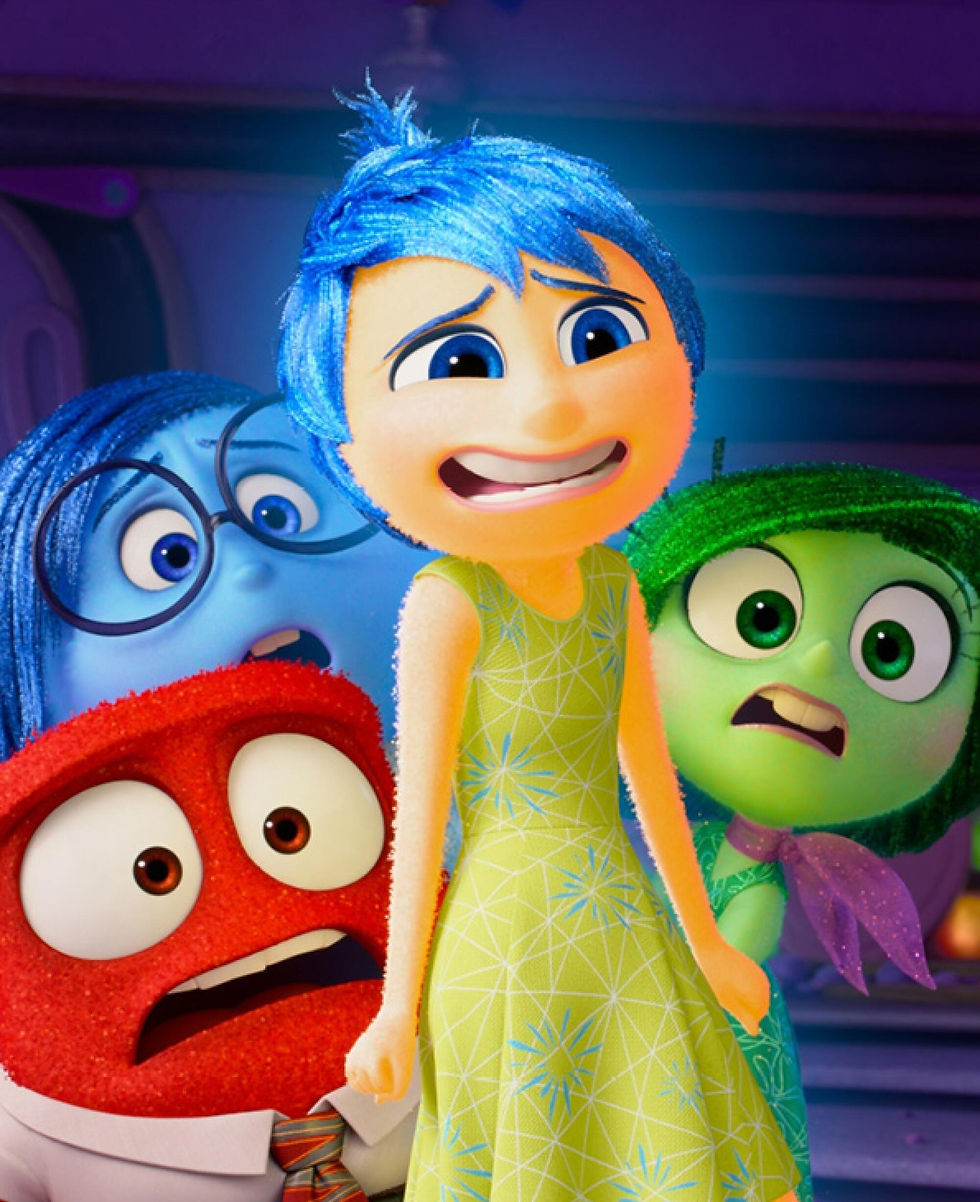
Speaking of toxic positivity... let's talk about Riley's A1-Since-Day-1 from birth, Joy. One of the first emotions Riley experienced was Joy. It's a beautiful emotion. And apparently a powerful driver in helping us keep our shit together.
But we see Joy go into overdrive when our girl, Riley, starts to experience another emotion as she starts developing a painful core memory brought on by a life transition: moving to a new place and experiencing abrupt changes that can shake up your life.
Just like how Joy captained the ship of Riley's emotions and would come in to save the day no matter what, I strived for this in life whenever shit went wrong and didn't go as planned. I learned some key things after watching this movie. And it may hopefully change the trajectory of my existing relationships and future ones for the better.
Here's what we can learn from Inside Out...or at least four takeaways I had.

Each emotion serves a purpose. We have emotions for a reason...including the perceived negatives ones.
Joy, anger, disgust, fear and sadness all exist for a reason. Everyone experiences these emotions, which makes them universal. These are basic emotions that serve us during various situations. They may arise in response to our environment, people or receiving information that affects us positively and negatively...or somewhere in between.
Disgust may help us avoid something potentially harmful like spoiled food that'll make us sick. Fear may arrive to protect us from harmful and dangerous situations or motivate us to get out of an environment. Anger may prompt us to act on things to move forward and get what we want or assert ourselves when threatened or wronged. Joy provides us with gratitude, meaning, and an inner light that helps us navigate any situation with contentment. Sadness is our natural response to the loss of something or someone we care about...and it helps us experience and appreciate other emotions, which can develop an array of other emotions. How's that for you?
Seeing the emotions personified in the movie was such a brilliant way to deliver this message to kids of all ages...even ones at age 33.

We should express our feelings because it communicates to others (and ourselves) what we need in any given moment. This is connection.
When something's bothering me, I have every right to let someone know especially if it will impact our relationship. Ever had a problem with someone and didn't address it, yet found it was awkward to fully show up around the person? Yeah. There's a reason emotions surface.
So while we shouldn't act out based on all our emotions, talk therapy taught me that feelings and emotions are information. And information is useful. It alludes. It reveals. Our values, principles, goals, desires, dislikes, and sense of self can come into direct conflict with people, our environment and situations sometimes. When that happens, our emotions can clue us in to what's going on...and maybe lead us to figuring out why.
Disgust is a strong aversion to things or even people that communicates to others what we dislike or just isn't for us.
Anger stirs up often as a way for us to communicate our values and principles when they've been disrespected.
Fear shows up to communicate what we view as a threat, danger and then triggers how we respond to the challenge.
Joy opens the door to connection and lets others know what we enjoy and what lights us up.
Sadness communicates loss and hurt and may let others know we need help or support.
When we smother and suppress our emotions or don't outwardly express them...it can lead to depression. Like a de-pression of expression. Depression. Inward. When emotions aren't functioning well, depression can creep in. We saw this in the movie when Riley's emotional motherboard completely shut down. It's like her emotions turned off and she took extreme measures to get her needs met, which in this case was returning to the home she missed. All the way across the country by bus.

Experiences become memories, which help shape our personality.
I wholeheartedly believe life is meant to be experienced and LIVED. Because that is how I learn and retain the lesson. I'm a kinesthetic learner. Something clicks in my mind and I get that "A-ha" moment once I've experienced it for myself and absorbed the information. Another wrinkle is etched onto my brain and an imprint is left on me somehow.
I didn't know a moment in time or a collection of them influenced my personality though. We've heard of the whole "nature vs. nurture" discussion regarding personality. After watching this movie, it dawned on me how much a person's environment and the people we encounter leave a lasting impact on us.
Emotions influence our personality...and vice versa. Situations affect our personality. Emotions and personality affect our values and sense of self.
Riley's emotional headquarters is connected to "Personality Island." On Personality Island, family and hockey are a couple of the main things Riley cares about as shown in the movie. These things make up parts of Riley and inform her personality. It all started connecting for me.

You can experience more than one emotion at once and that's ok.
Emotions can work together. And sometimes, you may experience a range of them at once or in some sort of sequence. Because life isn't black and white...which, I'm still learning. There are shades of gray. There's nuance. It's messy. It's colorful. It's imperfect. It's complex. We're complex. We're human.
Tears are typically associated with sadness, but you can have tears of joy. This is what Riley experienced when Joy finally let Sadness have space to exist. Moving across the country to a new home and place with her family, yet finding solace in hockey cemented a new core memory for Riley.
Yelling is typically associated with anger, but you can shout in excitement and joy. Sometimes a few emotions can morph into a new emotion as we mature through new experiences.

While Inside Out is a fictional story of Riley and her emotions, it's portrayal of emotions and personality is backed by psychologists and neuroscientists. The movie's concept was inspired by the director and co-writer's curiosity surrounding his own daughter's development as she entered her teenage years and her personality evolved. This resulted in an entertaining, relatable and educational story that landed so well.
Our emotions are meant to be felt. All of them. And it took a Disney and Pixar movie to teach me this at my big age because I have a lot to unlearn as I reparent the little girl within me.


Comments