


Alabama’s Music Legacy: Why You Should Visit the Alabama Music Hall of Fame in Muscle Shoals

Updated: Dec 7, 2025
What I love about museums is they are an affordable and fun way to explore, learn and support your local nonprofits. This one has been on my list for a while. And it’s dog-friendly! Let’s check out the Alabama Music Hall of Fame located in Tuscumbia, Alabama…which is part of the Muscle Shoals area in North Alabama.

When you hear Muscle Shoals, you may or may not immediately think of it as a music capital—but let me tell you about how this small Alabama town holds big-time music history. After an acceptable two-hour drive, I arrived North Alabama with my pup on a Friday and the literal first stop on our Muscle Shoals trip was the Alabama Music Hall of Fame in Tuscumbia. It hit every note. It set the tone for our musical trip because we got a comprehensive introduction to history before visiting the neighboring music studios.
I was kinda proud to learn about all the music artists who stood in the same room as I and touched the same piano keys, mics, drums, and even walls years or decades prior. Realizing Aretha Franklin, one of the greatest vocalists, apparently found her "sound" in the FAME music studio in Alabama was pretty cool to learn.
Fun fact: Aretha Franklin recorded her famous "Respect" with the Muscle Shoals Rhythm Section (also known as the "Swampers") musicians she previously worked with at FAME Studios.
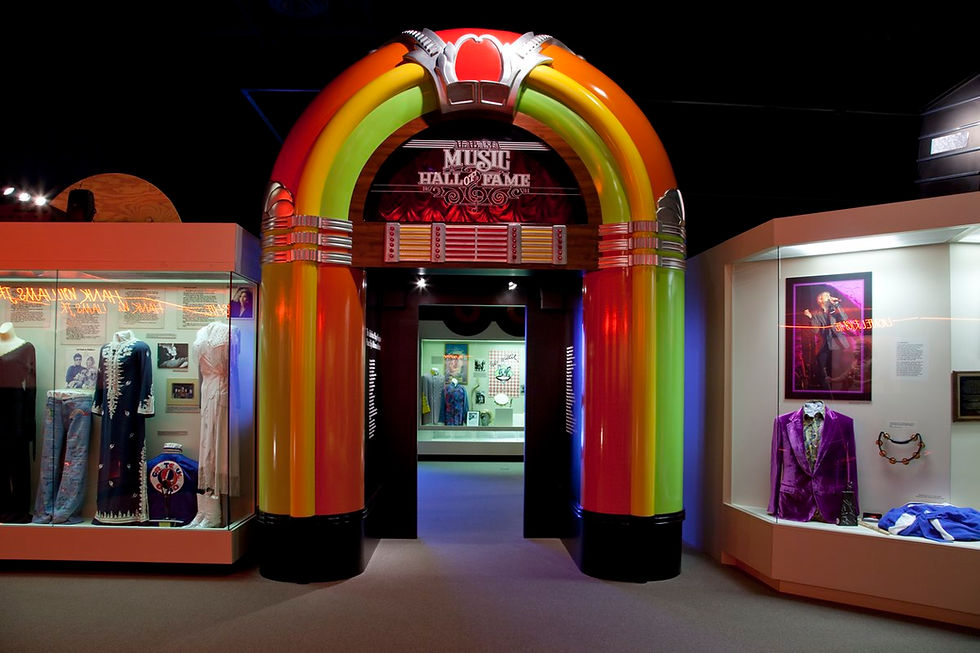
Muscle Shoals: Small Town, Massive Sound
You’d be surprised at how many iconic tracks have roots in this quiet corner of Alabama. Muscle Shoals has been a recording hotspot for legends like Aretha Franklin, Percy Sledge, Otis Redding, Etta James, and even Bob Dylan and The Rolling Stones. Some notable Alabama musician include: Nat "King" Cole, Hank Williams, W.C. Handy, Commodores, Wilson Pickett, members from The Temptations, Candi Staton, Lionel Richie.
The Alabama Music Hall of Fame pays tribute to (mostly) Alabama artists and the engineers, producers, and songwriters who helped shape the albums and hits we still hold dear today. Generations later! And artists are still recording in Alabama, so I forsee the museum growing with new stories and facts to share over time.
I’ve always loved music, but this visit deepened my appreciation for how much the South flows through the veins of the recording industry. The museum highlights the profound contributions of Black artists, some of whom probably didn't get their flowers during their lifetimes—but who definitely left their fingerprints on the industry.
A Self-Guided, Soulful Tour
One of my favorite parts about the museum? It’s a self-guided experience. There's a time and place for guided tours and group explorations. But I very much loved and appreciated that I could check out the museum on my own...with the pup. That meant I could slow down, soak in the vibes, and take my time reading every single placard without feeling rushed or distracted by others. I wandered the exhibits to my own rhythm, which was perfect for a Sagittarius who likes to freestyle through life.
There were replicas of stage costumes, instruments, a tour bus, and recording equipment from way back when to give you a feel of the time and place. My four-legged travel companion, Prince, enjoyed as much as he could sniff around and take in the new environment. But just as I loosened the leash to give him free reign to look around, we knocked down a signage board. I almost thought twice about letting my pup have an off-the-leash tour for himself. Almost.
A Karaoke Moment in the Studio Booth
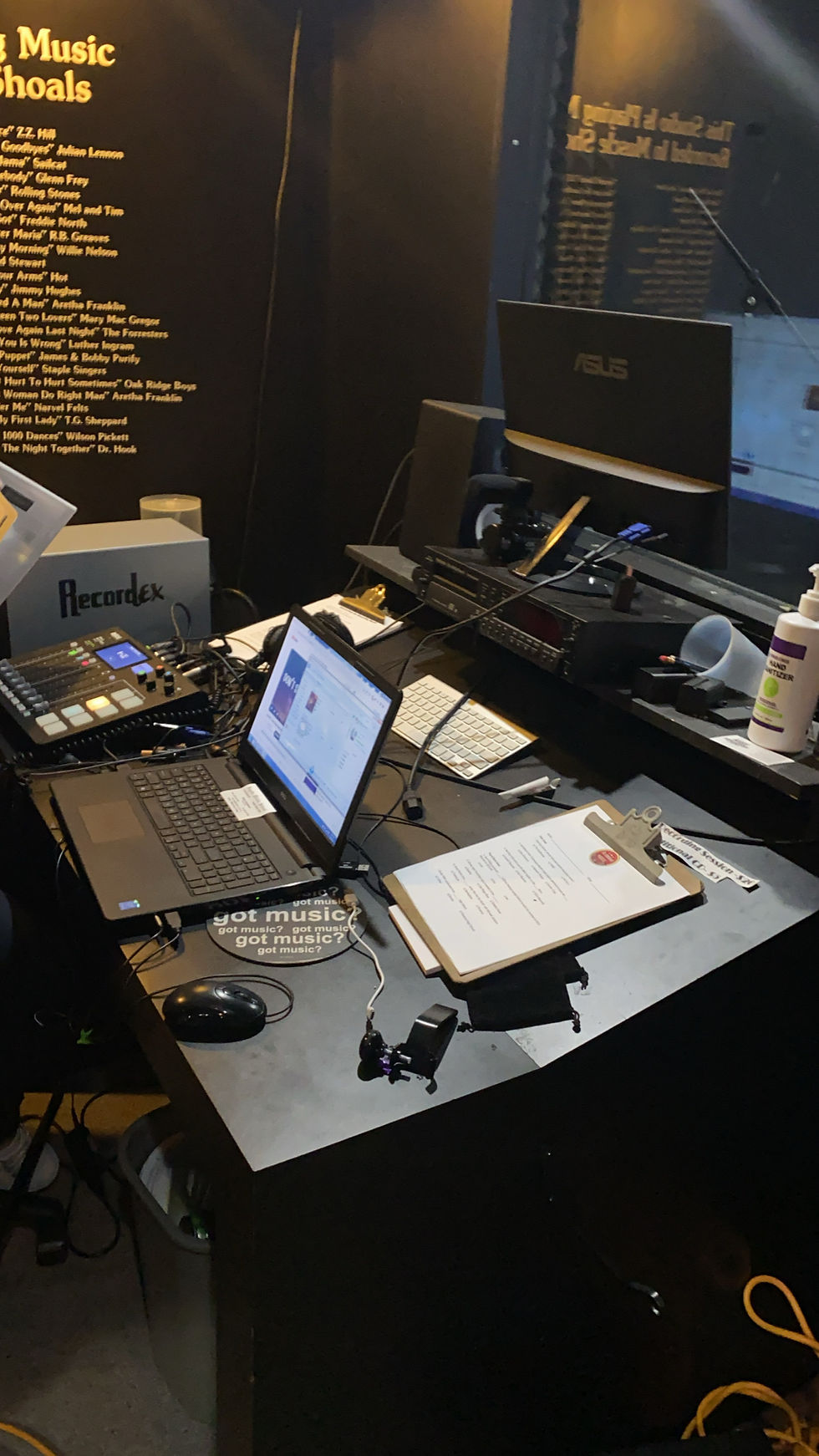
Towards the end of our tour, I noticed a replica recording studio and I thought to myself: "That'd be so cool if folks could record a song in there." And lo and behold, after we reached the gift shop check out and Prince persuaded me into getting him a doggy bowl, I learned that my pre-booked recording would in fact take place in that studio space. Now that was a perfect add-on for this musical museum experience. For an additional $20, you can record three songs as part of your visit. Just choose your favorite hits and the team will pull it up for your to sing along to in the studio. And your souvenir is a CD, a relic of prof to show others. Though, the only place I'd be able to play it is in my 17-year-old car with the CD player.
The experience is essentially upgraded karaoke, with the staff recording your singing pipes over the track playing on YouTube. I really felt like I was laying down a track. But I'm not gonna lie...I haven't sang in front of other folks before so while my mic was on ahem ...my vocal chords were a little constricted...and my sound was not giving the loud and proud chops I have have in my mind. I needed some warm-up sessions for sure. But time is money.
Was my session good? Debatable. Was it fun and exhilarating? Absolutely.
That studio moment alone made the whole trip worth it.
The Song That Sums It All Up: "I Feel Sanctified"
If I had to pick one song that represents the energy of this visit, it’d be “I Feel Sanctified” by Commodores. For one, the band is from Tuskegee, Alabama and rightfully so, they were inducted into the Alabama Hall of Fame. Gotta represent! To be sanctified is to be set apart for a purpose; it's also giving respect to something, which this collection of musical history in the South deserves.
Astrological Vibes: Fire Energy
Let’s bring an astrological element into this for a second because if permeates everything. This experience gave Fire energy—think Aries, Leo, and my fellow Sags. Passionate, expressive, unforgettable. That fire energy is about creating something that lights people up from the inside out. And music does exactly that.
We Love a Pet-Friendly Facility
As a dog mom, I live for pet-friendly adventures. The staff welcomed him with open arms, and that made the visit even more memorable. I can happily tell that this museum is a pet-friendly facility and pets are welcome. I always appreciate when I can take my pup with me to new places because it bonds us even more...and we always makes friends wherever we go.
Why Supporting Nonprofit Museums Matters
There's another layer to this experience that deserves shine. I noticed the staff keeping a record of visitors on a notepad after I finished laying down what should've been the best track I ever did (but sadly wasn't). I asked what type of info they wrote down and I learned these records got reported to the state and probably their board of directors as well.
Why?
Because it's a government-funded facility and non-profit that has to account for every piece of item and iota activity that occurs. Ahhhhhh, got it. That means they have a tight budget. That means limited staff. That means the business greatly appreciates your purchase of its higher-priced merchandise because it helps keep the lights on. For this reason, I usually collect coffee mugs for tea the way most do with shot glasses as souvenirs from every tourist attraction.
Supporting local, nonprofit institutions like this museum is more than just a nice way to spend a Saturday—it's an investment in culture, education, and community preservation. These kinds of organizations often operate on limited funding and depend on visitor support, donations, and awareness to keep their doors open and the stories alive.
Quick Facts
|
What I Learned from the Alabama Music Hall of Fame
It gives me a sense of pride to know my home state create and developed so much music that impacted the industry. I'm glad there's a museum to honor such a legacy.
Music is expression that connects us all. It's storytelling in a way that everyone can feel and understand. During the segregated 1960s, Black artists and white studio musicians hesitantly came together in a small studio and somehow recorded works of art here for the masses.
When we step into these museums, we’re saying that history matters. Southern stories matter. Black artistry matters. And it deserves to be seen, heard, and celebrated. Every day.
Many of these museums, including the Alabama Music Hall of Fame, offer free or low-cost admission. That means access to cultural enrichment without breaking your budget—a win for lifelong learners and curious wanderers alike. These spaces give us the chance to expand our worldview, connect with our regional roots, and feel a deeper sense of pride in where we come from.
If you’ve never been to the Alabama Music Hall of Fame, add it to your list. If you didn’t know about Muscle Shoals’ role in shaping the Recording Academy’s history, it's a must-visit. This isn’t just a museum. It’s a journey through rhythm, story, and resonance.
History isn't always in a textbook. Sometimes it's captured in a two-room studio in Alabama, waiting for someone to press “record.”
Whether you’re a history buff, a music fanatic, or someone who just loves discovering new parts of the South with your four-legged bestie, the Alabama Music Hall of Fame deserves a spot on your travel list. It's a shrine to soul and a groove-filled walk through time.
Stay stylish. Stay soulful. And follow the rhythm of your chart. ✨🎶
Jaz the Sag Travel Tips
Best time to visit the museum
I visited the museum in late February during our weather's transitioning period and between major holidays (beyond our great Black History Month). It was a regular random day and counting me and Prince, there were about four visitors. And I had zero problems with that because I got to enjoy my visit and my space.
Honestly, I think anytime a great time to visit Alabama Music Hall of Fame because it's so relevant and hopefully it'll continue to grow with more to showcase.
Check it out
I recently learned about the 2013 American documentary film called Muscles Shoals. It's a great one to check out before or even after your visit to appreciate the rhythm, blues, stories and production that comes from Alabama.
Jaz the Sag Rates It
5 arrows 🏹🏹🏹🏹🏹
NOTE: I am in no way affiliated with the museum or company and this post is NOT sponsored and does not include any affiliated links. This is just a courtesy post of my own will, sharing an honest review and my experience.


Comments